• About
  • Contact me

Killing Me Softly: Emotional & Psychological Abuse

~ Now that physical abuse is in the limelight and punishable by law, abusers have resorted to more insidious forms of control. The effects are just as destructive, more enduring, and more difficult to overcome.

Category Archives: Controlling People

Do Emotional Abusers Know What They’re Doing?

09 Saturday Jan 2016

Posted by Melinda Jensen in Abuse, Abuse victims, Controlling People, Counselling, Divorce, Emotional abuse, healing from emotional abuse, Love, Narcissistic abuse, Psychological abuse, Psychology, Psychopathology, Recovery from abuse, Relationship abuse, Relationship breakdown, Relationships, Tough love, Uncategorized, Verbal abuse

≈ 8 Comments

Vampire girl

Image courtesy of Stuart Miles at FreeDigitalPhotos.net

The short answer is, it depends. A true narcissistic personality is utterly conscious of the ways in which they are manipulating and hurting you. And they simply don’t care. More than that, it gives them pleasure, a sense of superiority and control. It is a big part of their psychopathology. Other abusers, who don’t score highly enough on narcissistic traits to be labelled with full-blown Narcissistic Personality Disorder, may simply be repeating patterns they learned in childhood and in subsequent relationships. I say ‘simply’, but the process via which it happens is far from simple, nor is it simple to unravel and to heal.

Mostly though, people don’t fit neatly into two separate categories – pathological abuser and ‘ordinary’ abuser, for instance. Personality traits aren’t ‘either/or’, but exist on a bipolar continuum, meaning they range from mild to severe, depending on the person, and also on the circumstances or environment in which that person acts. So…looking again at whether or not abusers do what they do purposefully…I can’t make that assessment for you, but may be able to help you fathom the answer as it relates to your personal situation.

On blogs and discussion groups you’ll find professionals and lay-people alike debating this question and coming out in favour of one side or the other. So how do you tell the difference?

  1. Look for the lies

If your partner consistently lies, chances are they are fully aware of what they’re doing. There is one school of thought that suggests narcissistic personalities are so adept at deceiving themselves, they actually believe their own lies. I have rarely witnessed this to be the case. There’s a reliable way of finding out, however.

If you catch them in a lie, bring it to their attention in a non-accusatory way. Simply state the truth and that you are aware you’ve been lied to. Then wait for the reaction.

The abuser who is aware she is lying will immediately go for the jugular – yours! It will be swift and brutal. (If you don’t keep your wits about you, you’ll be the one who ends up apologizing.) The response you get will likely have absolutely nothing to do with the point you’ve just made but will be something pulled out of thin air to deflect from their own guilt. They will, instead, hark back to the past and throw some perceived, and entirely irrelevant misdemeanor of yours in your face. And because you care about how they feel, you will likely take the bait. It’s a trip to hell.

2. Their body language and facial expression will reveal the truth.
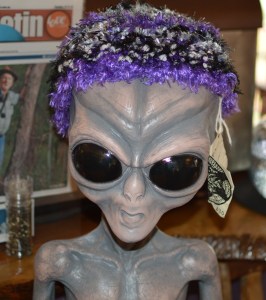
Image from Springbrook - showing an ancient beech tree with twisted roots.

The cold, soulless eyes tell you all you need to know

There’s a phenomenon I have come across countless times during my discussions with targets of emotional abuse. There is something soulless about the eyes and expression of an abuser who clearly has sadistic tendencies. Their eyes will go black. Their facial expressions will be incredibly cold. There is something ‘frozen’ and reptilian about the face that looks back at you. You’ll feel chilled to the bone and very frightened, even if he/she has never laid a hand on you. Trust this instinct.

3. Your tears and genuine emotional pain will not move them.

This hardly needs explanation. If you find yourself genuinely in pain and trying to reason with your abuser, tears in your eyes, your heart breaking … and it fails to move them … they are very aware of what they’re doing. In the words of my own abuser, ‘I knew what I was saying and doing was wrong, and it wasn’t true … but I just wanted to stick it to you.’ He felt that was a perfectly reasonable explanation. I’ll go out on a limb here and disagree with numerous ‘experts’, many of whom have never experienced this first hand, and say it’s utterly inappropriate to excuse these people on the grounds that the poor things don’t have the capacity for empathy. Oh dear, isn’t it sad? They don’t have the capacity for intimacy. They’ll never really experience real love. While that may be true, abusers in this category don’t value things like intimacy – so they aren’t suffering at all. You are. And they don’t give a hoot.

The Bottom Line

Does it really matter if they’re aware of their effect on you, or not? You can’t change them. In fact, from the point of view of ‘tough love’, leaving them to it may give them the only chance they have of facing their demons and becoming better people. It’s not your job. Not your circus. Not your monkeys. The harder you try, the more you will fail. Narcissists already think you are in their lives for one reason only, and that is to make them the centre of your universe. The harder you try, the more you are feeding them what they want – the popular terminology for what you are to them is ‘narcissistic supply’. You are being sucked dry by an emotional vampire and therapists and researchers agree that the chances of positive change are very, very small.

Do you want to waste years of your life hoping for the unattainable?

Share this:

  • Click to share on Pinterest (Opens in new window) Pinterest
  • Click to share on X (Opens in new window) X
  • Click to share on Facebook (Opens in new window) Facebook
  • Click to share on Tumblr (Opens in new window) Tumblr
  • Click to email a link to a friend (Opens in new window) Email
Like Loading...

An abuser hides his true ‘self’.

04 Saturday Jul 2015

Posted by Melinda Jensen in Abuse, Controlling People, Counselling, Emotional abuse, help for abuse victims, Narcissistic abuse, Personal growth, Psychological abuse, Psychology, Psychopathology, Recovery from abuse, Relationship abuse, Relationships, Verbal abuse

≈ 7 Comments

Tags

Counseling, Domestic Violence, narcissistic abuse, Psychological Abuse, Psychopathology, Recovery from abuse, Relationship abuse, Relationship Counseling, Relationship Problems, Relationships, Verbal Abuse

Disclaimer: I have used the masculine gender to describe an abuser in the title of this post for ease of writing. Throughout this post I have referred to both sexes by using the plural personal pronouns, ‘they’ ‘them’ or ‘their’ in recognition of the reality that women are also capable of abusing their loved ones.

One of the most common questions I hear is, ‘How can someone hide an abusive personality?

An abuser's mask

“-1360 Schreiberfigur anagoria” by Anagoria – Own work. Licensed under CC BY 3.0 via Wikimedia Commons.personality?’ In other words, how do we not see it coming? If these people are truly as ugly and cruel as we describe, why wasn’t that obvious from the beginning?

The truth is, abusers are highly skilled at hiding their pathological personalities. If they weren’t, they’d never secure employment, gain friends or even negotiate the grocery store without risking a punch up. Normal people would never put up with an abuser’s ‘real self’.

Psychologists use the terms ‘real self’ and ‘ideal self’ when discussing the development of personality. The real self is easy to understand – it is comprised of our actual, manifest personality traits as well as all the aspects that make up our character. The ideal self is that to which we aspire. It’s our inner concept of who we really want to be; what we want to become as we mature. If the real self is too far removed from the ideal self, we experience discomfort within our psyches. We become disappointed in who we are, and how we behave towards others and the environment. If the gap between the real self and the ideal self is too wide, it can result in significant psychopathology.

Most of us are aware when we’re not being honest with ourselves, and subsequently take action to address the imbalance. For those with high levels of narcissistic traits however, the ego is too fragile to accept the disappointing image in the mirror, so they turn away from it in order to create a false self to present to the world. In turning away from their inner reality, they deny its’ existence. In brief, they detest what they see; don’t have the courage to face and overcome it; and so construct a false self that is not only different from their real self, but also extreme in its virtue, cleverness, and sense of importance. They overcompensate for self-hate by constructing this superior facade. The mask they wear is painted with virtues like understanding, compassion, intelligence, responsibility, reliability, humour, kindness and worldly achievements. They often (though not always) walk among us as the pillars of society and our most socially responsible high achievers. Frequently, they are known as generous, benevolent souls outside their intimate circle.

When we meet them, they come highly recommended. Their bosses, coworkers and friends sing their praises. What we don’t know is that they are mentally scanning the room for their latest target, desperate for a source of narcissistic supply. After all, they can’t feel good about themselves until they can make someone else look and feel bad. That someone needs to be empathetic, compassionate, responsible and reliable – all the traits the abuser lacks. Abusers resent their victims, who are everything the abuser wants to be. That resentment quickly escalates to intense hatred.

Man flirting with woman

Image courtesy of photostock at FreeDigitalPhotos.net

In the beginning, however, to hook the perfect target abusers need to be extremely careful not to let their masks slip. With an uncanny ‘nose’ for sniffing out potential sources of narcissistic supply, they can smell vulnerability the way a bloodhound tracks a scent. Through years of practice, they’ve become experts at discovering what makes you tick, what your hopes and dreams are, what you love and what you hate – the essence of who you are. They then have all the ammunition they need to hunt you down.

Where would you most like to travel to?’ ‘Really, the Netherlands? I can’t believe it – the Netherlands is next on my bucket list!

In this respect, abusers are chameleons. If you’re the unwitting victim, all you know is that suddenly you have met the one person in the world who understands you completely, who shares your hopes and dreams, and is aligned with your values. You can’t know that this person who is pursuing you so ardently is simply pretending to mirror your innermost thoughts, support your passions, love the same things you do and envision exactly the same ‘perfect’ future together. We don’t know we’ve been studied for a specific purpose and that our beloved is an expert at what he does. Dr Jekyll doesn’t have to think about becoming Mr Hyde. It happens as naturally as breathing.

During the wooing phase you’ll be ‘love-bombed’. That is, you’ll be pursued so passionately that before you know it, you’re addicted to this ‘love’. This phase is achieved by using the basic psychological principles of conditioning. You are relentlessly ‘rewarded’ at a rate that is not ‘normal’ in a normal population; and this creates an addictive emotional response within you. I will explain this process further in a subsequent post. For now, suffice to say that, once you’re successfully ‘addicted’ to abusers, then…and only then…will they drop their guard and reveal their real selves.

And you are in deep, deep water.

For an excellent and in-depth explanation of the complicated dynamics of abusive relationships, I highly recommend three books by Patrica Evans. I keep these books on my kindle and refer to them regularly. They have been extremely instrumental in my understanding and overcoming the effects of abuse. The book by Lundy Bancroft is often quoted as an extremely useful resource on numerous blogs on the topic of abuse. Click the images to take you to the Amazon store.

Share this:

  • Click to share on Pinterest (Opens in new window) Pinterest
  • Click to share on X (Opens in new window) X
  • Click to share on Facebook (Opens in new window) Facebook
  • Click to share on Tumblr (Opens in new window) Tumblr
  • Click to email a link to a friend (Opens in new window) Email
Like Loading...

Vulnerability after verbal, emotional and psycholical abuse

01 Monday Jun 2015

Posted by Melinda Jensen in Abuse, Abuse victims, Controlling People, counseling, Emotional abuse, healing from domestic abuse, healing from emotional abuse, help for abuse victims, Narcissistic abuse, Psychological abuse, Psychology

≈ 2 Comments

Tags

Abuse, abusive relationships, Counseling, Divorce, Emotional and Psychological Abuse, Emotional and verbal abuse, healing from abuse, love after emotional abuse, Narcissism, psychotherapy, Recovery from abuse, Relationships, therapy, Verbal Abuse, vulnerability after abuse

After my devastating experience with verbal, emotional and psychological abuse, I was absolutely convinced that no human being could ever touch my heart again. I was DONE. Over it. Had better things to do with what remained of my life. Intimacy was suddenly an alien phenomenon for me…me, who, at the age of 54, had always been so relationship-oriented. I found myself utterly repulsed by the mere thought of connecting in an intimate and sexual way with another human being. And yet…one day it happened.

If the video fails to load, please follow this link to my YouTube page:

Vulnerability After Abuse

Disclaimer:   This video is based on my phenomenological experience. That is, it is subjective, told from my unique world view and the authentic expression of my feelings. As any decent therapist will assert, feelings are neither right nor wrong, good nor bad. Feelings just are. Negative emotions tell us something needs to be addressed and healed in our lives. They can be examined for rationality and adjusted if found to be unreasonable; and they can be used to change our outer circumstances, should those feelings prove to be trustworthy.

At times during this video, I speak of my very real distress and emotional pain, which also impacted on my neurological condition, as stress invariably does. I have drawn my own conclusions as to its cause. We are each our own experts when it comes to what we feel, how we react and what we need to do to improve our lives.

In brief, the intent of this video is not to point the finger of blame or seek revenge, but rather to enlighten those who are struggling with similar issues and offer a ray of hope. I am ever grateful to each and every human being who has shared part of my life’s journey. Each one, no matter how painful the experience, has been my teacher and I have faith and hope that their own journeys, though we have parted, may continue to expand their horizons. Each is a precious soul with the potential for greatness, and to this day, I believe each and every one of them to be good people at their core, doing their best to learn and grow as life leads.

D

Share this:

  • Click to share on Pinterest (Opens in new window) Pinterest
  • Click to share on X (Opens in new window) X
  • Click to share on Facebook (Opens in new window) Facebook
  • Click to share on Tumblr (Opens in new window) Tumblr
  • Click to email a link to a friend (Opens in new window) Email
Like Loading...

He Loves Me, He Loves Me Not

16 Monday Feb 2015

Posted by Melinda Jensen in Abuse, Boundaries, Controlling People, Divorce, Emotional abuse, Narcissistic abuse, Psychological abuse, Psychology, Psychopathology, Relationship breakdown, Relationships, Spirituality, Uncategorized, Verbal abuse

≈ 10 Comments

Tags

Abuse, abusive relationships, Counseling, Divorce, Domestic Violence, Emotional Abuse, Emotional and Psychological Abuse, Emotional and verbal abuse, Marriage Counseling, Narcissism, narcissistic abuse, Psychology, Psychopathology, psychopaths, Rage-a-holics

multicoloured flower

A hundred shades of rage. Image courtesy of FreeDigitalPhotos.net/Phisekit

Every abuse victim is intimately familiar with this phenomenon. One minute you’re on cloud nine, certain your relationship is on the mend, and swept off your feet (again) with words of adulation, undying love and devotion. He’ll buy you whatever you want, wine you, dine you, and soften you with gentle, sweet words of love and appreciation…but just when you think it’s safe to come out from under that protective shell of yours, the wining and dining turns to maligning. You are being abused yet again. The abuse cycle continues, ad infinitum.

And the switch will be shockingly sudden, brutal and devastating. This morning you were his ‘forever love’. This afternoon, you’re ‘a f…ing psycho’. And somewhere in the midst of this tirade your mind starts to bend. It’s bending to his will. It’s exactly where he wants this conversation to go.

But why? That’s the question on everyone’s lips. My first (and probably final) reaction is to say, ‘Who cares!’ No excuse is good enough, no delving into his past and uncovering his childhood issues will ever convince me he’s not doing this deliberately. It is utterly C-O-N-S-C-I-O-U-S. He is completely aware of what he is doing to you. That’s why he keeps doing it. It gives him a thrill to hurt you. Research shows that when the average person is angry…when they are arguing and yelling…their blood pressure and heart rate go up. That’s because it’s stressful for us average Joes and Joannas. Not so for your consummate abuser. For him or her, shouting at and intimidating another human being results in a blood-pressure and heart-rate drop. That’s right. It feels good. It calms them down. They’re in control again.

And control is what it’s all about.

That’s why he can peacefully put his head on the pillow beside you…and sleep so soundly…while you cannot. You toss…and turn…and agonize.

Don’t judge him by your own yardstick. The ‘raging’ is his elixir – the potion that feeds the Mr Hyde that ever lurks within him. A friend of mine described her abuser as ‘bipolar’. I understand why she feels this way – the sudden switch from one persona to another smacks of real mental illness. But her abuser has no such illness. His cognitive functioning is fine and dandy. He may be narcissistic in the extreme, or even a full-blown psychopath, but these are not true mental disorders. They are disorders of choice. They are diseases of the soul. The labels may appear in the DSM (the Diagnostic and Statistical Manual used by psychiatrists and psychologists worldwide), but those who’ve studied the history behind the DSM understand that its main author was likely a narcissist himself. There’s a whole separate post to be written on that topic. I won’t address it here.

Someone who is Bipolar or Schizophrenic wants to get well. They want treatment. Not so the flawed being with high narcissistic traits. He doesn’t perceive his flaws at all. He’s enjoying the experience; the power trip. Why would he want to change? He doesn’t want to get better because he doesn’t think there’s anything wrong with him. He’s too perfect for that.

Not everyone who engages in abuse fits into this category, but the proportion seems to be disturbingly high. There are those who can be enlightened by education, and those who cannot. There are those caught in the web of their own ignorance, their difficult pasts, and their erroneous thinking. There is hope for such as these. They react from their own pain. They get angry and express their anger abusively over issues that seem real to them. There will be triggers, associated with their own painful pasts…but there will not be the random, cold-blooded ‘switch’ from love to hate.

We need to know the difference.

Share this:

  • Click to share on Pinterest (Opens in new window) Pinterest
  • Click to share on X (Opens in new window) X
  • Click to share on Facebook (Opens in new window) Facebook
  • Click to share on Tumblr (Opens in new window) Tumblr
  • Click to email a link to a friend (Opens in new window) Email
Like Loading...

Why does it take so long to get over a pathological partner?

20 Monday Oct 2014

Posted by Melinda Jensen in Abuse, Controlling People, Divorce, Emotional abuse, Narcissistic abuse, Psychological abuse, Psychology, Psychopathology, Relationship breakdown, Relationships, Uncategorized, Verbal abuse

≈ 6 Comments

Tags

Abuse, abusive relationships, Divorce, Emotional Abuse, Grief, Narcissism, narcissistic abuse, Psychopathology, Psychopathology in relationships, Relationship breakdown, Relationships, Separation, Verbal Abuse

I’ve been fairly quiet online for a few weeks as I’m in the middle of very stressful legal proceedings. Attempting to sort out property settlement issues with a narcissist is a nightmare beyond your wildest imagination. Lies, manipulation, character assassination – check! Trying to fleece you of your entitlement – check! Blame and false accusations – too easy! I hope we’re now on the home strait so I can devolve myself of this cloying and still destructive relationship. The need to put it behind me is strong; in fact, so strong that I almost caved under the pressure to accept a very unfair settlement figure, just to rid my life (and soul) of the stress and uncertainty. However, that would be playing into his hands one final time – my curtain call as a doormat – and is, most assuredly, exactly what he wants.

I’ll keep you posted. From those of you who pray, I humbly ask for your prayers at this time. I keep many of you in my own prayers also as I read your blogs and contemplate the heartbreaking experiences you’ve been through, or are still going through. So many of you inspire and sustain me.

However, that’s not really what I started out to say today. As the title of this post suggests, it’s about why it takes so long to get over a pathological relationship. For me, it’s been a year since separation and I’m still caught in the web of lies, the vortex of confusion and the revisiting of self-doubt. I came across this excellent article on another site called Psychopath Free and wanted to share it with you all. The writer, who identifies as ‘Peace’ on the site forum, expresses the dynamics at play with clarity and compassion, and I found myself relating far too easily. To know that one is not alone, to experience that validation, is such an intrinsic part of our healing.

The article by ‘Peace’ follows: Continue reading →

Share this:

  • Click to share on Pinterest (Opens in new window) Pinterest
  • Click to share on X (Opens in new window) X
  • Click to share on Facebook (Opens in new window) Facebook
  • Click to share on Tumblr (Opens in new window) Tumblr
  • Click to email a link to a friend (Opens in new window) Email
Like Loading...

Boundaries: A Litmus Test for Potential Abusers

29 Monday Sep 2014

Posted by Melinda Jensen in Abuse, Boundaries, Controlling People, Emotional abuse, Psychological abuse, Psychology, Relationships, Spirituality, Verbal abuse

≈ 7 Comments

Tags

Abuse, abusive relationships, anger, Assertiveness, Boundaries, Controlling People, Counseling, dysfunctional relationships, Emotional Abuse, Emotional and Psychological Abuse, Narcissism, Verbal Abuse

Abusers have no respect for boundaries. Even if you attempt to build an impenetrable fortress around you, an abuser will think nothing of blowing it up with the equivalent of emotional and psychological dynamite. You’ll find yourself crushed and flattened under the rubble, and while you’re crawling back out you’ll be blamed for the fine mess you’ve gotten yourself into.

Once you’ve extricated yourself from a toxic relationship, this tell-tale disrespect of personal boundaries can be a useful guide when it comes to avoiding the attentions of, and entanglements with other controlling people in the future. In fact, life seems to have handed me plenty of opportunities to hone this particular skill since I separated from an abusive ex-partner just over a decade ago.

For example , my hackles automatically go up when someone offers unsolicited advice. I don’t need to be told what to do; I need a listening ear and empathy. There are times when I need help. We all do, but it isn’t helpful if someone takes over my show. Both these instances – offering unasked-for advice, and crossing the line between help and control – show that the other person has boundary issues; that they aren’t aware of where their personhood finishes and mine begins. Hence, they step into my space and act as if they are me. My emotional response is usually an internal feeling of anger at being pushed around. We need to listen to anger. In and of itself, it is not a negative emotion but a protective one. Anger tells us when our boundaries are being crossed, whether those boundaries are physical or emotional. Anger tells us we need to protect ourselves in some way.

Anger is your friend. Use it well and wisely.

Boundaries are also crossed whenever people label us as something we know to be untrue of ourselves. I recently pointed out to a relatively new male friend that I found an email joke he sent me inappropriate, outlining my reasons quite clearly. He turned nasty and told me (this person who barely knows me) that I have issues. I’d like a dollar for every controlling person who’s analysed my ‘issues’ for me without taking a jolly good look in the mirror first. It’s not that I believe I don’t have any issues. As far as I’m concerned the human condition is all about issues, and our efforts to overcome them, in our quest for personal and spiritual maturity. It’s just that I don’t believe an amateur psychologist has any right to take me apart and act as judge and jury regarding my emotional stability or lack thereof; nor do I believe I have the particular set of issues allocated to me by this almost-stranger.

I’m extremely grateful for these warning signs. By paying heed I have effectively sidestepped a couple of potential relationships that would likely have led to more control, abuse and grief. Perhaps I should have given them the benefit of the doubt. Perhaps if I had given them another chance or two or three, I might have granted them the opportunity to choose to grow and change. But I’ve reached an age and stage where I no longer wish to wait around for someone to catch up with me. I no longer wish to teach and guide and support such people. It’s time for me to reach for the good and allow the rest to slide on by. I listen to the wisdom of the still, small voice…and feel the peace.

Try setting a boundary and observe what happens. A controlling person will always react negatively.

Share this:

  • Click to share on Pinterest (Opens in new window) Pinterest
  • Click to share on X (Opens in new window) X
  • Click to share on Facebook (Opens in new window) Facebook
  • Click to share on Tumblr (Opens in new window) Tumblr
  • Click to email a link to a friend (Opens in new window) Email
Like Loading...
Newer posts →
Follow Killing Me Softly: Emotional & Psychological Abuse on WordPress.com

Enter your email address to follow this blog and receive notifications of new posts by email.

Join 488 other subscribers

Previous posts

A sample of blogs I Follow

  • A Life Hidden
  • Documenting M.E.
  • Jo so and sew
  • john pavlovitz
  • The Origins of Left Behind Eschatology
  • Button Counter
  • Jessica Kate Writing
  • ChurchWatch Central
  • Matter Of Facts
  • debi riley
  • justajesusfollower.wordpress.com/
  • FOX 4 Kansas City WDAF-TV | News, Weather, Sports
  • Peaceful Single Girl
  • Christ-Centered Counseling

Blog Stats

  • 54,060 hits

Enter your email address to follow this blog and receive notifications of new posts by email.

Join 488 other subscribers

Follow me on Bloglovin!

Follow my blog with Bloglovin

My pages

  • About
  • Contact me

Create a free website or blog at WordPress.com.

A Life Hidden

Documenting M.E.

Documenting my journey down the rabbit hole of Myalgic Encephalomyelitis

Jo so and sew

john pavlovitz

The Origins of Left Behind Eschatology

by David Malcolm Bennett

Button Counter

Lots of fun. Crazy, quilty, fun...and seam rippers.

Jessica Kate Writing

Romances with sass, wit and grit

ChurchWatch Central

#churchwatchcentral

Matter Of Facts

An idiosyncratic collection of facts (and the occasional opinion)

debi riley

The Creative Zone for Making Art

justajesusfollower.wordpress.com/

FOX 4 Kansas City WDAF-TV | News, Weather, Sports

FOX4KC WDAF-TV

Peaceful Single Girl

Seeking to exalt Christ in the lives and relationships of Christian single women

Christ-Centered Counseling

Privacy & Cookies: This site uses cookies. By continuing to use this website, you agree to their use.
To find out more, including how to control cookies, see here: Cookie Policy
  • Subscribe Subscribed
    • Killing Me Softly: Emotional & Psychological Abuse
    • Join 166 other subscribers
    • Already have a WordPress.com account? Log in now.
    • Killing Me Softly: Emotional & Psychological Abuse
    • Subscribe Subscribed
    • Sign up
    • Log in
    • Report this content
    • View site in Reader
    • Manage subscriptions
    • Collapse this bar
 

Loading Comments...
 

    %d